Occupational training for working with diisocyanates under REACH
We prepare your employees for safe work with diisocyanates under Regulation (EU) 2020/1149 (REACH) — general, intermediate and advanced level training in one place. Available online and in person; we track the 5-year refresher deadline for you.
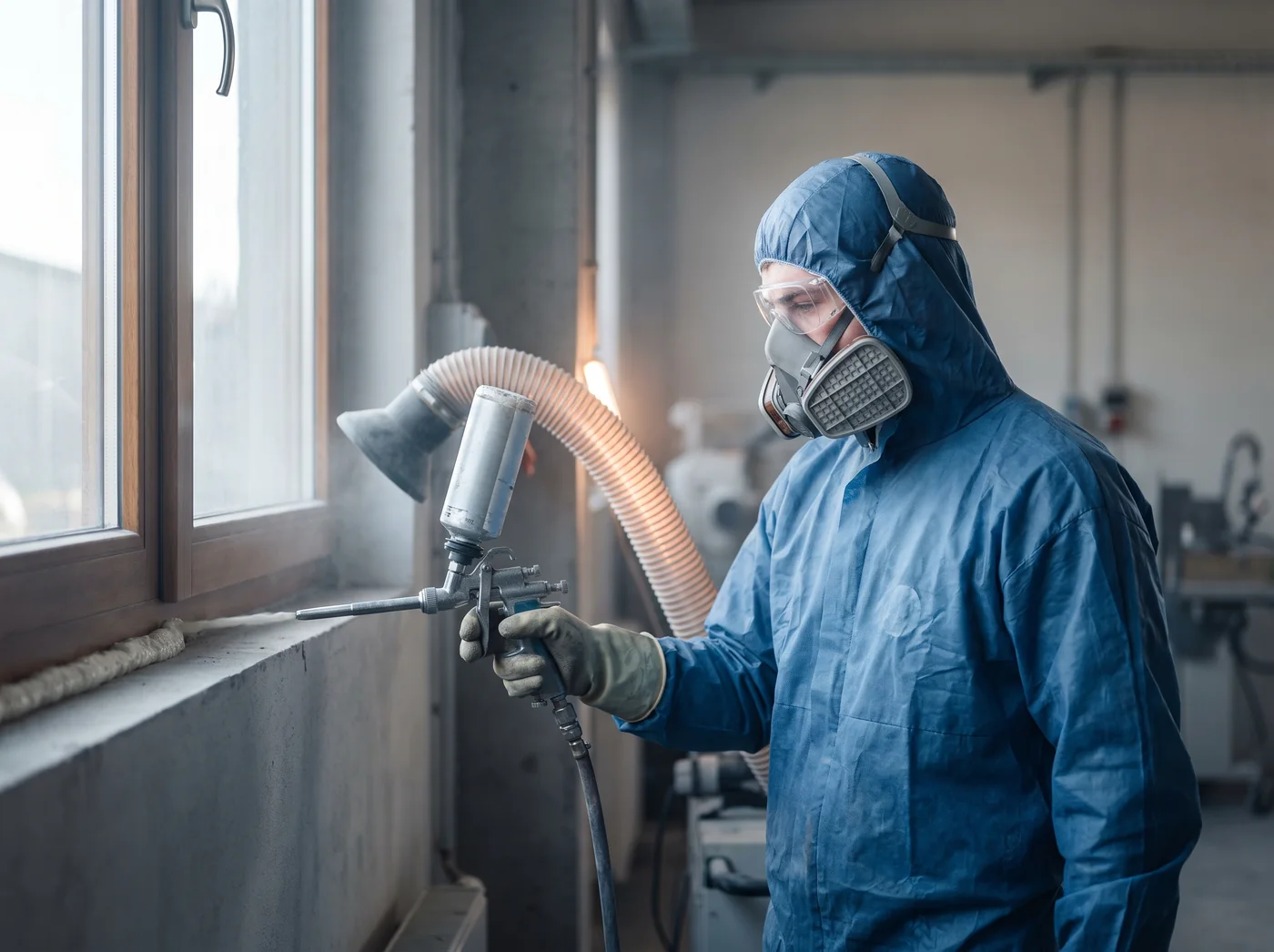
Interested in this course?
Leave us your contact and we will get back to you with dates, usually within 24 hours.
What diisocyanates training is and why it is mandatory
Diisocyanates are chemicals used, for example, in polyurethane foams, adhesives, sealants, varnishes and coatings. Repeated exposure can cause sensitisation of the respiratory tract and skin, which can lead to occupational asthma. Working with them therefore carries a higher health risk that requires occupational training for operators.
Occupational training for working with diisocyanates has been a legal requirement since 24 August 2023 under Commission Regulation (EU) 2020/1149, amending Annex XVII to the REACH Regulation (EC) No 1907/2006. It applies to industrial and professional users of diisocyanates at concentrations above 0.1% by weight. There are three training levels — general, intermediate and advanced. Related occupational health surveillance of employees exposed to chemical agents is covered by occupational health service.
Who the training is for
The training is intended for the individual who actually comes into contact with diisocyanates at work, as well as for the company, which must be able to demonstrate that its employees have completed the mandatory training.
For the individual
If you apply polyurethane foams, adhesives, sealants or coatings containing diisocyanates above 0.1% by weight — by spraying, roller application, brush, dipping or mechanical processing — occupational training has been a legal condition for carrying out this work since 24 August 2023.
For the company and employer
As an employer you must be able to demonstrate during an inspection that every employee working with diisocyanates above the threshold concentration has completed training at the level matching their actual work. We can also train larger work groups at once.
What you will learn in the training
The scope of the training is governed by Regulation (EU) 2020/1149 and is tailored to the way your operation actually works with diisocyanates.
General level
Mandatory for all industrial and professional uses. Covers the chemistry and properties of diisocyanates, the mechanism of sensitisation, exposure limits, workplace ventilation and hygiene principles, and the correct use of personal protective equipment.
Intermediate and advanced level
Build on the general level and focus on specific application techniques.
- Intermediate: open mixtures at ambient temperature, spraying in booths, roller, brush or dip application, mechanical post-treatment.
- Advanced: incompletely cured products, foundry applications, hot formulations above 45°C and open-air spraying with limited ventilation.
How the training works
The entire process is led by our team — from the first contact through to the issue of the certificate in five steps.
Enquiry You contact us by phone or email and tell us how your employees work with diisocyanates (spraying, roller application, dipping, etc.) — we use this to determine the required training level.
Scheduling and level We agree a date, scope and the specific level (or combination of levels) of training based on your employees' actual work.
Training at your premises or online The general level is completed online. The intermediate and advanced levels are combined with a practical session at your premises, focused on specific application techniques.
Knowledge verification The training concludes with verification of the knowledge gained about safe work with diisocyanates.
Issue of the certificate After completion we issue a certificate of completion. We also notify you of the refresher deadline in five years.
Legal framework and refresher training
Under Regulation (EU) 2020/1149, training must be refreshed at least every 5 years. We track the refresher deadline for you and remind you in good time.
| Requirement | Value |
|---|---|
| Threshold concentration | above 0.1% by weight of diisocyanates |
| Obligation in effect since | 24 August 2023 |
| Training levels | general, intermediate, advanced |
| Refresher | at least every 5 years |
What the diisocyanates training includes
Participation requirements
The training is intended for industrial and professional users of diisocyanates at concentrations above 0.1% by weight under Regulation (EU) 2020/1149.
Three training levels
General level for all industrial and professional uses, intermediate for open mixtures, spray booths and roller/brush application, advanced for hot formulations and open-air spraying with limited ventilation.
Chemistry and toxicity of diisocyanates
Properties of diisocyanates, the mechanism of respiratory and skin sensitisation, exposure limits and health risks from repeated exposure.
Safe handling and PPE
Workplace ventilation, hygiene principles, correct selection and use of personal protective equipment when working with diisocyanates.
Application techniques by level
Specifics of spraying, roller application, brushing, dipping and mechanical post-treatment — scope depends on the training level your operation needs.
Refresher training
Under Regulation (EU) 2020/1149, training must be refreshed at least every 5 years — we remind you of the deadline.
Why choose Alpha Safety?
- Certified trainers with industrial safety experience
- Certificate of completion under Regulation (EU) 2020/1149
- All three training levels (general, intermediate, advanced) in one place
- Training at your premises or online, depending on the level
- We remind you of the refresher deadline (every 5 years)
Duration
Depends on training level
Format
Online and in-person
Related courses
Short answer
Occupational training for working with diisocyanates has been mandatory since 24 August 2023 for industrial and professional users of diisocyanates above 0.1% by weight, under Commission Regulation (EU) 2020/1149. There are three levels — general, intermediate and advanced — depending on the type of use. Training must be refreshed at least every 5 years.
Časté otázky – Diisocyanates
Diisocyanates are chemicals used, for example, in polyurethane foams, adhesives, varnishes and coatings. Repeated exposure can cause sensitisation of the respiratory tract and skin, which can lead to occupational asthma. That is why the European Commission introduced mandatory training under Regulation (EU) 2020/1149 for everyone who works with them industrially or professionally.
The obligation has applied since 24 August 2023. It is a directly applicable EU regulation, so it applies equally in all member states without the need for a separate national law.
It applies to industrial and professional users of diisocyanates, alone or in mixtures, at a concentration above 0.1% by weight — for example when working with polyurethane foams, adhesives, sealants or coatings. The employer must be able to demonstrate that employees have completed the training.
The general level is mandatory for all industrial and professional uses and covers the basics of chemistry, toxicity and safe handling. The intermediate level covers open mixtures at ambient temperature, spraying in booths, and roller, brush or dip application. The advanced level covers more demanding processes — hot formulations above 45°C and open-air spraying with limited ventilation. Employees complete the level that matches their actual work.
Regulation (EU) 2020/1149 requires a refresher at least every 5 years. We track the refresher deadline for you and remind you in good time.
After completion we issue a certificate of completion, which the employer can use to demonstrate compliance with Regulation (EU) 2020/1149 during an inspection.
The general level can be completed online or in person. For the intermediate and advanced levels, which involve specific application techniques, we recommend combining online theory with an in-person session at your premises.
Basic course from 30,90 € per person (prices exclude VAT). We confirm the exact price based on the number of participants and the training format.
Interested in diisocyanates training?
Contact us and we will schedule the training level and date for your operation.