Occupational health and safety
Our company provides comprehensive occupational health and safety (OHS) for businesses, sole traders and their premises across Slovakia — from preparing and maintaining OHS documentation through risk assessment and OHS training to the investigation of workplace accidents and workplace supervision. Everything is handled in line with Act No. 124/2006 Coll. on occupational health and safety, so your premises pass labour inspectorate checks without issues and avoid penalties.
Updated:
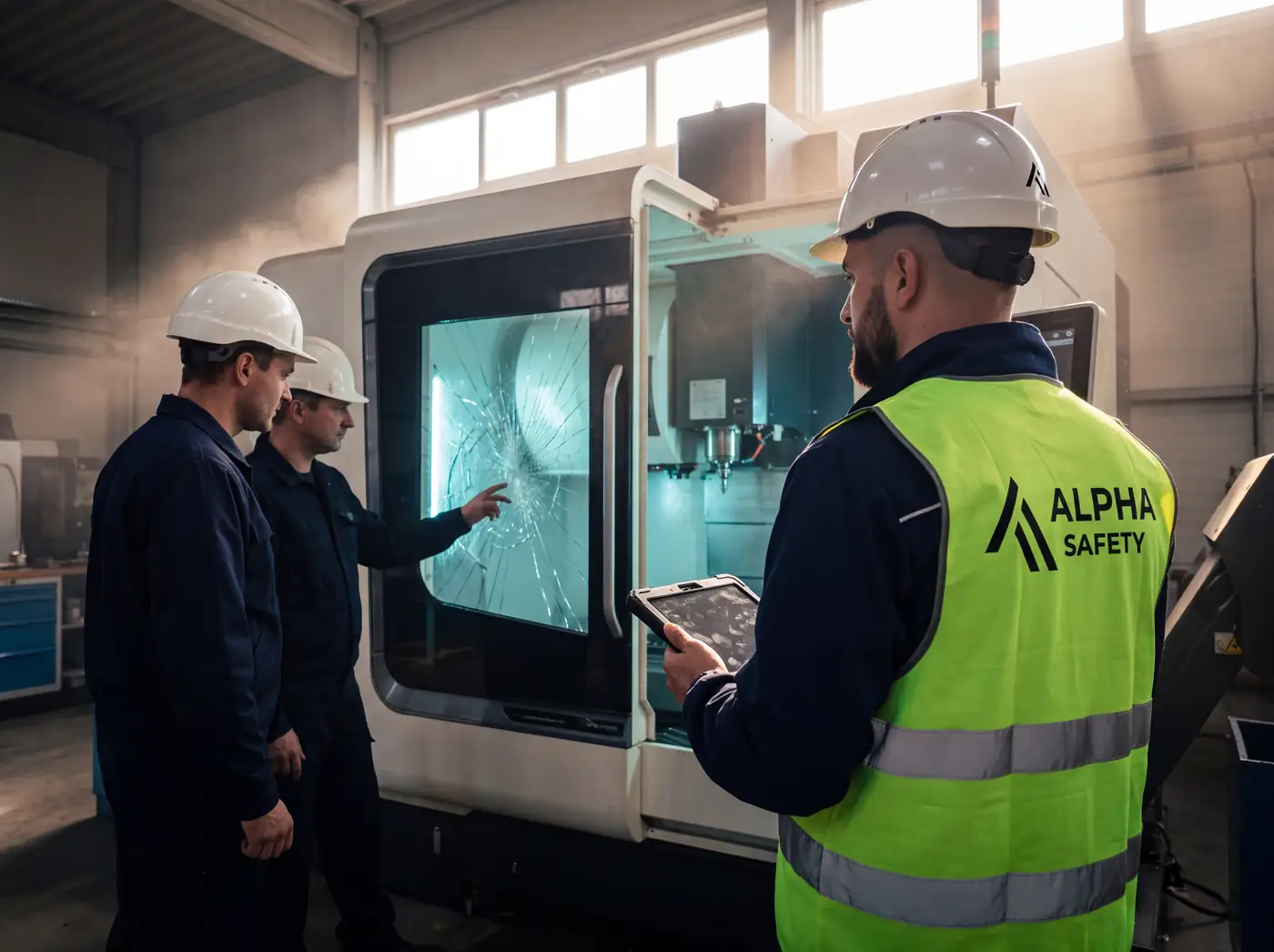
- Vstupný audit a posúdenie rizík
- Kompletná dokumentácia BOZP — vypracovanie aj aktualizácie
- Vstupné a opakované školenia zamestnancov
- Pravidelné kontroly a previerky pracovísk
- Vyšetrovanie a registrácia pracovných úrazov
- Dychové skúšky zamestnancov na alkohol
- Poradenstvo a podpora 24/7
- Zastúpenie pri kontrole inšpektorátu práce
Prevezmeme plnú zodpovednosť za BOZP vo vašej spoločnosti.
flat fee from15 €/monthexcl. VAT
Interested in this service?
Leave us your contact and we will get back to you with pricing and dates, usually within 24 hours.
Short answer
BOZP (occupational health and safety) is the set of measures by which an employer, under Act No. 124/2006 Coll., prevents injuries and occupational diseases. Alpha Safety provides companies with BOZP outsourcing: risk assessment, keeping documentation, initial and refresher training, investigation of occupational accidents, regular workplace surveillance and professional support during a labour inspection.
What BOZP is and which act governs it
Occupational health and safety (BOZP) is the set of measures, rules and obligations through which an employer prevents occupational accidents, occupational diseases and other work-related damage to health. The law defines it as the general principles of prevention and the basic conditions for ensuring occupational health and safety and for eliminating the risks and factors that give rise to them (§ 1 of Act No. 124/2006 Coll.).
BOZP is not governed by a single regulation but by an interconnected system of acts and implementing regulations. Three acts form its foundation, supplemented by government regulations and decrees for specific areas:
| Regulation | What it governs |
|---|---|
| Act No. 124/2006 Coll. on OSH | the general principles of prevention and the basic obligations of the employer in ensuring occupational health and safety |
| Act No. 125/2006 Coll. on labour inspection | oversight by labour inspectorates over compliance with BOZP and sanctions for breaching obligations |
| Act No. 355/2007 Coll. on the protection of public health | health surveillance (the occupational health service) and the categorisation of work according to health risk |
| Government Regulation No. 391/2006 Coll. | minimum safety and health requirements for the workplace |
| Government Regulation No. 395/2006 Coll. | the provision and use of personal protective equipment (OOPP) |
| Decree No. 508/2009 Coll. | safety when working with reserved technical equipment – pressure, lifting, electrical and gas equipment |
Obligations in the area of BOZP apply to both employers and employees in all sectors of the productive and non-productive spheres (§ 2 of Act No. 124/2006 Coll.) – from a small operation to a large industrial enterprise.
Keeping track of all these regulations, their amendments and deadlines on an ongoing basis is demanding in terms of both time and expertise. Alpha Safety takes over the entire BOZP agenda for you – from risk assessment through complete documentation and training to representation during labour inspection checks, throughout Slovakia and for companies of every size. In the following parts you will find exactly what the law requires and how we handle it for you. If you are looking for a detailed explanation of the whole legislation and obligations, read our complete BOZP guide as well.
Your obligations as an employer and how we take them over
Before we show how we take over the entire agenda, let us look at exactly what the law requires of an employer. Obligations in the area of BOZP do not arise only at a „large“ company. They apply from the first employee – including workers engaged under an agreement. Act No. 124/2006 Coll. imposes them in § 6 and the following paragraphs. The cost of meeting them is borne by the employer and may not be passed on to the employee (§ 6 ods. 11). Proceed in this order:
Assess the risks and draw up a written document. Identify the hazards and threats, assess the risk and draw up a written risk-assessment document covering every activity performed by employees (§ 6 ods. 1 písm. c)). This is the foundation everything else builds on – the choice of OOPP, the content of training and the scope of documentation.
Apply the principles of prevention. When taking measures, follow the general principles of prevention (§ 5): eliminate the hazard at its source, give priority to collective protection over individual protection, replace more hazardous work with less hazardous work, and adapt the work to the employee's abilities. Carry out the measures properly and in good time so that they serve their purpose (§ 5 ods. 3).
Arrange a safety service (BTS). Preventive and protective services are delivered by a safety technician or an authorised safety technician (§ 21 a § 22). On a contracted basis, they may be performed only by a person holding an authorisation issued by the National Labour Inspectorate.
Arrange an occupational health service (PZS). Health surveillance is mandatory for all employees regardless of their number and work category – that is, from the very first employee (Act No. 355/2007 Coll., § 30). For work in categories 1 and 2 a simplified arrangement suffices; for hazardous categories 3 and 4 the provider must hold an authorisation.
Provide personal protective equipment (OOPP). On the basis of the risk assessment, draw up a list of OOPP and, for employees whose life or health protection requires it, provide effective OOPP free of charge and keep records of its provision (§ 6 ods. 2). Ordinary work clothing, uniforms and footwear are not considered OOPP.
Train and instruct employees. Instruct every employee on starting work and then repeatedly. Refresher instruction must take place at least once every three years, unless a special regulation lays down a shorter interval (§ 7 ods. 5; the three-year interval applies following the amendment effective from 1 January 2023 – the frequently cited figure of „2 years“ is pre-amendment). Education and training may be organised only by a person holding an NIP authorisation (§ 27).
Keep BOZP documentation. Without paperwork you are defenceless during an inspection. The basic scope:
- the risk-assessment document,
- the list and records of OOPP provided,
- records of instruction and training,
- the BOZP policy framework – mandatory for an employer with 11 or more employees (§ 6 ods. 1 písm. k)),
- operating rules, records of occupational accidents and documentation of professional inspections and tests of VTZ.
Inspect and remedy shortcomings. Continuously monitor the state of BOZP and of work equipment, the use of OOPP and compliance with the ban on alcohol and smoking in the workplace (§ 9 ods. 1), and remedy shortcomings identified by inspection (§ 9 ods. 2).
Act correctly in the event of an accident. Where an occupational accident is registered (incapacity for work longer than 3 days), investigate it, draw up a record of it no later than within 8 days (§ 17 ods. 4 písm. b)) and send this record to the competent labour inspectorate within 8 days of the day you learned that it is a registered accident (§ 17 ods. 7).
Carrying out these tasks is ensured by managerial employees at all levels of management – they are an equal and inseparable part of their job duties (§ 6 ods. 8). As you can see, this is an ongoing agenda that requires both time and expertise. This is precisely where we come in.
In-house vs. external BOZP and how cooperation works
We take over the entire occupational health and safety agenda for you. As an external safety service (BTS), we run your BOZP from the first audit to the annual service – meanwhile you focus on your business, not on paperwork and statutory provisions.
In-house vs. external BOZP – why external pays off
| Aspect | In-house employee | External BOZP (Alpha Safety) |
|---|---|---|
| Qualification | you have to build and maintain it | authorised safety technician with an NIP authorisation |
| Tracking legislation | on your shoulders | handled on an ongoing basis for you |
| Management time | ties up your capacity | you focus on your business |
| Overheads | salary, training, cover | one clear service |
By law, the cost of BOZP is always borne by the employer and may not be passed on to the employee (§ 6 ods. 11). An external service makes those costs clear and manageable – without the need to build your own department. Bonus: responsibility for BOZP rests with managerial employees at all levels of management as an equal and inseparable part of their duties (§ 6 ods. 8) – we give them the materials to handle it.
How cooperation works
Entry audit we go through the workplaces, the existing documentation and the technical equipment, and identify the hazards.
Documentation and risk assessment we prepare a written risk-assessment document and all the mandatory directives tailored to you.
Training initial and refresher instruction of your employees and managers.
Ongoing service regular checks, updates when things change, investigation of any accidents and representation during inspections.
Not sure what your company really needs? We will go through it with you, with no obligation.
BOZP training, OOPP, categorisation of work and the occupational health service
The three areas that the labour inspectorate and regional public health authorities check most often – and where companies most often slip up on deadlines – are training, OOPP and health surveillance. Here is exactly what the law lays down.
Training and instruction of employees
The employer must familiarise every employee with BOZP regulations and principles, namely in these situations:
- on starting employment,
- on transfer to another workplace or a change in the type of work,
- on the introduction of new technology, a new work procedure or a new work resource.
Instruction is then repeated at least once every three years (§ 7 ods. 5 of Act No. 124/2006 Coll.). Beware of a widespread misconception: following amendment No. 114/2022 Coll. (effective from 1 January 2023), the two-year interval no longer applies – the word „two“ was replaced by the word „three“. Many competitors and freely available sources still state two years. Shorter intervals under special regulations (e.g. operation of reserved technical equipment) remain unaffected.
From experience: the most common mistake we come across is outdated training. Following the amendment to Act No. 124/2006 Coll., refresher instruction must be carried out at least once every three years (§ 7 ods. 5) – many companies still run on the obsolete two-year cycle, and that does not hold up during an inspection.
Personal protective equipment (OOPP)
OOPP is provided by the employer to employees free of charge – wherever the protection of their life or health requires it (§ 6 ods. 2 of Act No. 124/2006 Coll.). The selection and conditions of provision are governed in detail by Government Regulation No. 395/2006 Coll. The following applies:
- OOPP is allocated on the basis of a risk assessment, not across the board,
- the employer keeps records of its provision,
- ordinary work clothing, uniforms and footwear are not OOPP (§ 1 ods. 3 of Government Regulation No. 395/2006 Coll.),
- the cost is borne by the employer and may not be transferred to the employee (§ 6 ods. 11 of Act No. 124/2006 Coll.).
Categorisation of work
According to the degree of health risk, work is classified into four categories (§ 31 of Act No. 355/2007 Coll.; the criteria are set by Decree of the Ministry of Health of the Slovak Republic No. 448/2007 Coll.):
| Category | Nature of the work |
|---|---|
| 1 | no health risk / acceptable risk |
| 2 | risk that does not damage health, though an adverse response of the body cannot be ruled out |
| 3 a 4 | hazardous work – higher exposure to factors of the working environment |
The classification of work into categories 3 and 4 (hazardous work) is decided by the competent regional public health authority.
Occupational health service (PZS) – from the first employee
BOZP and PZS are not the same thing. BOZP deals with safety at work (risks, accidents, OOPP, technical equipment), whereas PZS ensures health surveillance – it assesses the impact of work on employees' health.
Health surveillance through an occupational health service is mandatory for every employer from the first employee, regardless of the number of employees or the category of work (§ 30 of Act No. 355/2007 Coll.). The scope varies by category:
- categories 1 and 2 – a simplified arrangement; surveillance may be ensured by your own employees or through a contractor, with a health-risk assessment at least once every 24 months,
- categories 3 and 4 – the PZS is ensured by a provider authorised by the Public Health Authority of the Slovak Republic (a team led by a doctor), with a health-risk assessment at least once a year.
We cover training, the selection and recording of OOPP, the categorisation of work and the setting-up of the occupational health service comprehensively – including the correct deadlines, which are where companies most often slip up during an inspection.
Occupational accidents, fines and labour inspection checks
Even a single more serious accident triggers a chain of statutory obligations and brings in a state inspection. An accident after which an employee is incapacitated for work for more than 3 days is recorded as a registered occupational accident. The employer is required to:
- draw up a record of the registered occupational accident no later than within 8 days of the day it learned that it is a registered accident (§ 17 ods. 4 of Act 124/2006 Coll.),
- send this record to the competent labour inspectorate within 8 days and deliver it to the injured party or, as the case may be, the surviving relatives (§ 17 ods. 7). For a serious occupational accident a separate deadline of 30 days applies for the investigation.
Fines: what you face if BOZP is neglected
Sanctions are imposed by the labour inspectorate under § 19 of Act 125/2006 Coll. The rates are not symbolic:
| Breach | Fine |
|---|---|
| Breach of BOZP obligations (employer) | up to €100,000 |
| Serious breach of regulations | €1,000 – 200,000 |
| Illegal employment | €4,000 – 200,000 (with 2 or more persons, at least €8,000) |
| Accident with serious bodily harm | at least €20,000 |
| Accident resulting in death | at least €33,000 |
| Managerial employee / statutory body | up to four times the average monthly earnings |
| Natural person obstructing an inspection | €65 – 650 (§ 20 ods. 2) |
For a fatal accident and serious bodily harm, this is not an upper limit of „up to“ – it is the statutory minimum that the inspector is obliged to impose. That these are not exceptional cases is shown by enforcement too: in 2024, inspectorates imposed 2,489 fines with final legal effect totalling €5,636,169.
Who carries out checks and how
Compliance with BOZP is checked by the labour inspectorate. Under § 12 of Act 125/2006 Coll., the inspector has broad powers: to enter the workplace at any time, to demand documentation, explanations and copies, to take photographic and video documentation, to order the removal of shortcomings, to prohibit the use of machinery, premises or work procedures that endanger safety, and to file a proposal for the imposition of a fine. A check may also come without notice.
The most common mistakes companies make
The same shortcomings recur during checks:
- an out-of-date risk-assessment document – risks are not reassessed after a change of technology, premises or work procedures,
- token training – the paperwork exists, but its content does not match the actual risks; refresher instruction must in fact take place at least once every three years (§ 7 ods. 5 of Act 124/2006 Coll.),
- missing OOPP records and BOZP status checks not carried out under § 9.
It is precisely these failings that the inspector uncovers first. We deal with them for you – from risk assessment through training and documentation to representation during a labour inspectorate check.
BOZP by sector: the risks differ, the solution must fit
Universal BOZP does not exist – a construction site faces different hazards than a production hall or a kitchen. We bring a solution tailored to your operation.
| Sector | Main risk |
|---|---|
| Construction | Falls from height and the overlap of contractors – with more than one contractor on a construction site, the developer must appoint a safety coordinator (Government Regulation 396/2006 Coll. § 3 ods. 1). |
| Industrial manufacturing | Long-term the most hazardous sector in Slovakia – most accidents occur when operating machinery and equipment. |
| Warehousing and logistics | Handling loads and the movement of forklift trucks near employees on foot. |
| Administration | Even an „office“ has obligations – the occupational health service is mandatory from the first employee regardless of the category of work (§ 30 of Act 355/2007 Coll.). |
| Catering and HoReCa | Burns, slips on wet floors and work with sharp tools at a fast pace. |
Why BOZP cannot be ignored
The reasons are twofold and both are very concrete: the health of your people and the protection of the company against high fines.
The real risk of accidents and diseases. The statistics of the National Labour Inspectorate for 2024 speak clearly:
Most occupational accidents have long arisen in industrial manufacturing. Occupational diseases (source: NCZI) in 2024 affected women (215) and men (208) almost equally – the risk therefore does not concern only „hazardous“ occupations.
The real risk of fines. Neglecting BOZP also has hard financial consequences. Under § 19 of Act No. 125/2006 Coll., the labour inspectorate may impose a fine on the employer:
- up to €100,000 for a breach of obligations,
- from €1,000 to 200,000 for a serious breach,
- at least €20,000 if the breach gave rise to an accident with serious bodily harm, and at least €33,000 in the case of a fatal accident.
That this is no theory is evidenced by the inspectorate itself: in 2024 it imposed 2,489 fines with final legal effect totalling €5,636,169.
Alpha Safety – a modern partner for BOZP. We take over comprehensive occupational health and safety for you. Throughout Slovakia we help companies of every size, including large employers – from risk assessment through complete documentation and training to representation during labour inspection checks. You focus on your business; we make sure you comply with the law and that your people are safe.
What does our OHS service include?
OHS documentation preparation
Complete documentation in accordance with current legislation - guidelines, instructions, operating procedures.
Employee training
Initial, periodic, and repeated training for all categories of employees.
Risk assessment
Identification of hazards and risk assessment at all workplaces.
Inspection activities
Regular workplace inspections and OHS regulation compliance checks.
Accident investigation
Professional investigation of workplace accidents and proposal of preventive measures.
Why work with us?
- Certified safety technicians
- More than 10 years of experience
- Individual approach to each client
- 24/7 availability for urgent situations
- Competitive prices
Frequently asked questions – OHS
BOZP is occupational health and safety – a set of legal, technical and organisational measures to prevent occupational accidents and diseases. Act No. 124/2006 Coll. governs both the general principles of prevention and the basic conditions. Responsibility for ensuring it lies with the employer from the very first employee.
Yes. BOZP obligations apply to every employer that employs at least one employee, and they also cover workers engaged under work-performance agreements. Under § 6, Act No. 124/2006 Coll. requires the employer, among other things, to assess risks, instruct employees and provide personal protective equipment. The scope of the obligations varies according to the number of employees and the nature of the work.
An employer must have a safety service in place, either through its own professionally competent employees or under contract via an authorised person (§ 21 and § 22 of Act No. 124/2006 Coll.). For most small and medium-sized companies an external provider is more economical. Alpha Safety takes on the role of your safety service on a contractual basis.
The employer is obliged to familiarise an employee with BOZP on commencement and to instruct them on an ongoing basis thereafter. Under § 7 ods. 5 of Act No. 124/2006 Coll., this familiarisation is repeated at least once every three years, unless legal regulations stipulate a shorter period. Shorter intervals apply to certain activities and occupations. Alpha Safety provides both initial and refresher training, including in online form.
An employer may familiarise its own employees itself, through its managers or professionally competent staff. However, providing training to other companies (externally) requires an authorisation for education and training in the field of labour protection, which is issued by the National Labour Inspectorate under § 27 of Act No. 124/2006 Coll.
Under Act No. 125/2006 Coll. on labour inspection, the labour inspectorate may impose a fine of up to EUR 100,000 for breaching BOZP regulations (§ 19). If the breach caused serious harm to health, the fine is at least EUR 20,000, and in the event of a fatal occupational accident at least EUR 33,000. Outsourcing BOZP substantially reduces this risk.
Besides compensation for damage and benefits from the Social Insurance Agency, the employer faces a fine from the labour inspectorate – if a fatal accident arose from a breach of regulations, at least €33,000 (§ 19 of Act No. 125/2006 Coll.). Where there is fault, criminal liability of managerial employees may also arise.
In the event of an occupational accident, you must establish the cause, take measures and record the registered occupational accident. Under § 17 of Act No. 124/2006 Coll. the employer keeps records of accidents and sends the record of a registered occupational accident within eight days (§ 17 ods. 7). Serious accidents must be reported to the labour inspectorate without delay. Alpha Safety investigates the accident, processes the records and ensures the reporting obligation is met.
A risk assessment is a written identification of workplace hazards and an evaluation of the level of risk they pose to employees. It is required by § 6 of Act No. 124/2006 Coll. and forms the basis for selecting protective measures and OOPP. Alpha Safety inspects the workplace, prepares the risk-assessment document and proposes specific corrective measures.
Always the employer, free of charge – the cost may not be passed on to the employee. The employer provides OOPP wherever the protection of life or health requires it, based on a risk assessment and with records kept (§ 6 ods. 2 and ods. 11 of Act No. 124/2006 Coll.). The selection procedure is governed by Government Regulation No. 395/2006 Coll.
The classification of work into one of four categories according to the level of health risk. The proposal for classification is prepared by the occupational health service; classification into risk categories 3 and 4 is decided by the competent regional public health authority. This is governed by § 31 of Act No. 355/2007 Coll. and Decree No. 448/2007 Coll.
Yes. Every employer must have an occupational health service (health surveillance) from the first employee, regardless of the number of employees or the work category. A simplified regime applies to categories 1–2, while risk categories 3–4 require a full authorised team. The obligation arises from § 30 of Act No. 355/2007 Coll.
BOZP (Act No. 124/2006 Coll.) addresses work safety and the prevention of occupational accidents. PZS – the occupational health service (Act No. 355/2007 Coll.) provides health surveillance and the prevention of occupational diseases. These are two separate statutory obligations that complement and work alongside each other.
When more than one contractor (an employer or a self-employed entrepreneur) carries out work on the site. The developer is then obliged to appoint a safety coordinator under § 3 ods. 1 of Government Regulation No. 396/2006 Coll. In practice this is a person with professional competence, for example an authorised safety technician or a site manager.
The minimum safety and health requirements for the workplace are governed by Government Regulation No. 391/2006 Coll. These include, for example, escape routes and exits, ventilation, temperature, lighting, sanitary facilities and rest areas. During workplace surveillance, Alpha Safety checks compliance with these requirements and flags shortcomings before an inspection finds them.
Write to us — we'll get back to you within one business day
Leave us your contact details and we'll get back to you — no commitment.
Need OHS services?
Contact us for a free consultation. We'll propose a solution tailored to your needs.